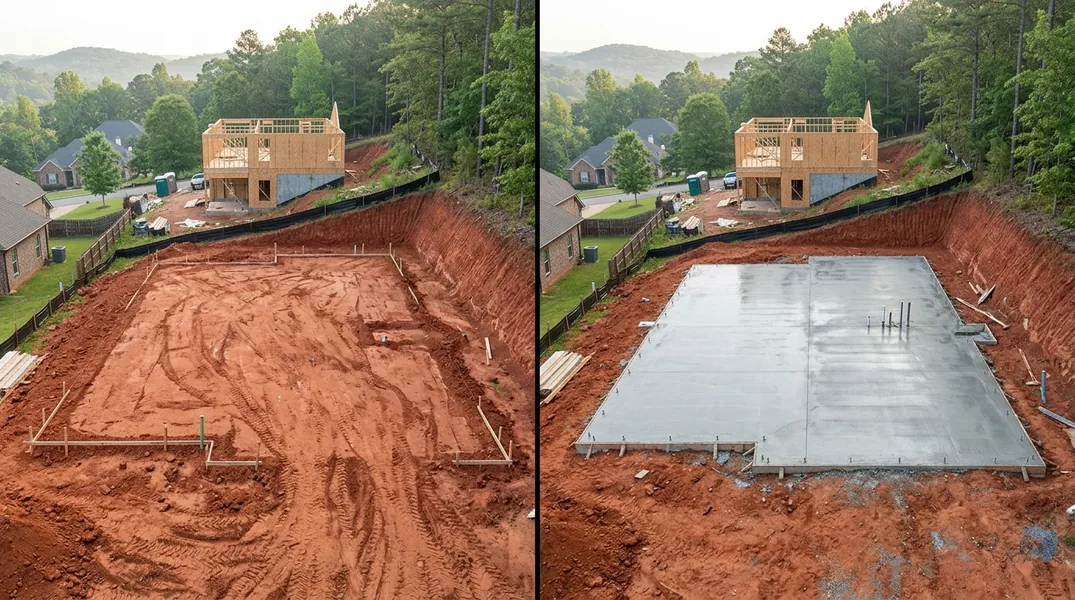
Understanding New Construction Slab Foundations in Birmingham
Purchasing a new home is one of the largest investments you'll make, and the foundation is literally the most important part. In Birmingham, many new construction homes are built on concrete slab foundations rather than traditional basements or crawl spaces. A slab foundation is a large, flat concrete pad poured directly onto the ground that serves as both the foundation and the flooring for the home's lowest level. Understanding how these foundations work and what to look for during your final walkthrough can save you thousands of dollars in repairs down the road.
Slab foundations are popular in our region because they're cost-effective to construct and work well in Alabama's climate. However, this doesn't mean all slabs are created equal. The quality of the soil preparation, the concrete mix design, proper drainage, and curing time all play critical roles in how your foundation will perform over the years. Before you close on your new construction home in Birmingham, you need to know what signs of trouble to watch for and when to bring in a professional to assess potential problems.
What to Look for During Your Slab Foundation Inspection
Your final walkthrough is the perfect time to conduct a thorough visual inspection of the slab foundation. Start by walking slowly through the entire home, paying close attention to the floor surface. Look for any visible cracks in the concrete, settlement issues where the floor appears uneven, or soft spots that feel spongy underfoot. Minor hairline cracks (less than 1/8 inch wide) are fairly common in new construction and typically aren't cause for alarm, but wider or longer cracks warrant closer examination. Check the baseboards and door frames as well; if they're cracked or pulling away from the walls, this could indicate foundation movement.
Don't forget to inspect the exterior perimeter of the home where the slab meets the foundation wall. Look for gaps, separation, or signs of water intrusion such as staining or efflorescence (a white, chalky powder). Check the grading around your home to ensure water slopes away from the foundation rather than pooling near it. Poor drainage is one of the leading causes of slab problems in the long term, so this step is crucial. If you notice any significant concerns during your walkthrough, it's wise to hire a structural engineer or foundation specialist to conduct a professional slab foundation inspection before you close.
Slab Cracks in New Build Homes: Normal or Serious?
One of the most common concerns new homeowners have is the appearance of cracks in their concrete slab. It's important to understand that concrete naturally shrinks as it cures, and some cracking is virtually inevitable. These shrinkage cracks are typically hairline in width and don't indicate a structural problem. However, not all cracks are harmless. The size, location, pattern, and whether the crack is actively growing are all factors that determine whether you have a minor cosmetic issue or a sign of a more serious foundation problem.
Structural cracks are usually wider than 1/4 inch, run diagonally or in a stair-step pattern, and may be accompanied by other signs like doors that won't close properly, windows that stick, or visible gaps between walls and the slab. If you're seeing these types of issues with your new construction slab, don't wait until after closing to address them. Request that the builder investigate and repair the problem before you take possession. If the builder resists or the problem persists after repairs, having a professional assessment on record protects you legally and can help you negotiate a credit or warranty extension. The team at Birmingham Concrete Pros can evaluate your slab and provide expert guidance on whether cracks are cosmetic or structural.
How Soil Conditions and Weather Affect New Construction Slabs
Many homeowners don't realize that the soil beneath their slab has a huge impact on how well the foundation will perform. Alabama's clay-heavy soil can be problematic because clay expands when wet and shrinks when dry, causing the ground to shift beneath the slab. This movement can crack concrete and create uneven floors. During the construction process, builders should have conducted soil testing and prepared the base properly with compacted fill and possibly a moisture barrier. Ask your builder for documentation of soil testing and site preparation work. If they can't provide it, that's a red flag worth investigating before closing.
Weather patterns in our region also play a role in slab performance. Heavy rainfall can saturate the soil and cause expansion, while dry spells can lead to shrinkage. New slabs are particularly vulnerable during their first year as they're still curing and adjusting to moisture conditions. If your new home was built during an unusually wet or dry period, the slab may experience more movement than typical as weather normalizes. This is another reason to document any cracks or issues at closing and monitor them over the first 12 months. Most reputable builders include a warranty that covers foundation defects for at least one year, so keep detailed records and photos of any concerns.
When to Call a Professional Foundation Inspector
If you're uncertain about the condition of your slab or have noticed anything concerning during your walkthrough, hiring a professional foundation inspector is money well spent. These experts have specialized tools and training to detect problems that aren't visible to the untrained eye. They can assess whether cracks are structural or cosmetic, identify drainage issues, check for moisture problems, and provide a detailed report that can be used in negotiations with the builder or your lender. Most inspectors charge between $300 and $500 for a comprehensive evaluation, which is a small price compared to the cost of foundation repairs later.
If you're in the Hoover area or anywhere in the greater Birmingham region and you want expert guidance on your new construction slab, don't hesitate to reach out. Birmingham Concrete Pros has years of experience evaluating concrete foundations and can help you understand what you're looking at. Call us at (205) 623-5839 or request a free estimate to discuss your concerns with a professional.
Protecting Your Investment: Documentation and Warranty Considerations
Before you close on your new construction home, make sure you have a clear understanding of what the builder's warranty covers. Most new home warranties include structural coverage for a period of one to ten years, depending on the builder and the specific defect. Read the fine print carefully and understand what constitutes a covered defect versus normal wear and tear. Take photographs and video of the entire slab condition at closing, documenting any cracks, uneven areas, or other issues. This creates a baseline that protects you if problems develop later and you need to file a warranty claim.
Keep all documentation related to your home's construction, including the soil report, grading plan, and any inspections performed by the builder. If you have a professional inspection done before closing, keep that report as well. These documents are invaluable if you ever need to pursue a warranty claim or if you're selling the home in the future. Don't assume that because your home is new, the foundation is perfect. New construction slabs can and do develop problems, and being proactive about documentation and inspection puts you in the best position to address issues quickly and protect your investment for years to come.
Looking for a professional concrete contractor in Birmingham? Birmingham Concrete Pros responds fast for all your concrete needs.
Get a Free QuoteOur services: Concrete Driveways · Concrete Patios · Stamped & Decorative Concrete