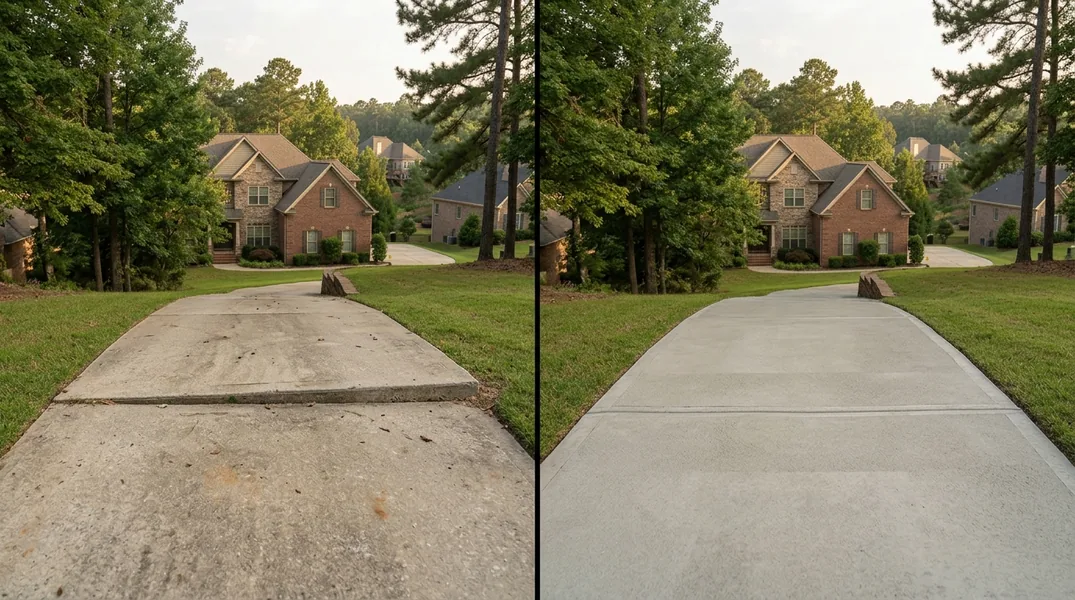
Understanding Birmingham's Red Clay Problem
If you own a home in Birmingham, you've likely noticed something unique about the soil beneath your feet. The region sits on a bed of red clay that presents one of the most significant challenges to concrete durability in the Southeast. This clay isn't just any soil; it's highly expansive, meaning it swells dramatically when wet and shrinks when dry. That constant movement creates stress on anything built on top of it, especially rigid structures like Concrete Driveways.
The problem intensifies because Birmingham experiences significant seasonal rainfall and humidity fluctuations. During wet months, the clay absorbs moisture and expands upward, pushing against your driveway from below. When dry seasons arrive, the clay contracts, leaving gaps and creating uneven settling. Over time, this cycle causes the concrete to crack, settle unevenly, and develop the kind of damage that turns a smooth driveway into a hazardous, unsightly mess. Homeowners who understand this geological reality can make better decisions about installation, maintenance, and repair strategies.
Sinkholes and Concrete Settling: A Hidden Threat
Beyond the everyday expansion and contraction of red clay, Birmingham homeowners face a more dramatic risk: sinkholes. The region's limestone geology creates natural voids and cavities underground. When water percolates through the soil and dissolves these limestone pockets, the ground above can suddenly collapse, swallowing everything on the surface. A sinkhole beneath your driveway doesn't just crack the concrete; it can create a catastrophic failure that requires complete reconstruction.
Sinkholes often develop gradually, and the first sign many homeowners notice is a cracked driveway in Birmingham that seems to worsen rapidly. What looks like normal settling might actually indicate subsurface movement or cavity formation. This is why professional inspection is critical. If you notice sudden dips, large cracks appearing over weeks rather than years, or areas where water pools in new patterns, these could be early warning signs of sinkhole activity. Addressing the issue quickly with proper Concrete Repair & Resurfacing can prevent minor damage from becoming a major expense.
Why Cracked Driveways Are So Common in Birmingham, AL
A cracked driveway in Birmingham isn't a sign of poor construction alone; it's often a natural response to the local environment. The combination of red clay movement, moisture cycles, and sinkhole risk creates perfect conditions for concrete failure. Even well-installed driveways can develop cracks within five to ten years if the underlying soil isn't properly prepared and managed. The key difference between a driveway that lasts twenty years and one that fails in five often comes down to how carefully the base was prepared and how well drainage was addressed during installation.
Thermal stress adds another layer of complexity. Birmingham's temperature swings between seasons cause concrete to expand and contract. When that movement is constrained by clay that's also moving, the concrete has nowhere to go but up, down, or sideways, resulting in cracks. Hairline cracks might seem minor, but they allow water to penetrate the concrete and accelerate deterioration. Once water gets beneath the surface, it accelerates clay movement and can even contribute to sinkhole formation. This is why catching and repairing cracks early is so important for long-term driveway health.
Concrete Settling in Hoover, Pelham, and Surrounding Areas
The problem isn't isolated to Birmingham proper. Homeowners in Hoover and Pelham experience the same geological challenges. Concrete settling in Hoover is particularly common because the area sits on similar red clay deposits and limestone formations. Many residents in these suburbs have experienced the frustration of watching their once-level driveway develop low spots where water collects, or high spots where the concrete has heaved upward. This settling isn't something that stops on its own; it continues gradually over years unless the underlying cause is addressed.
The settling process typically follows a predictable pattern. First, you'll notice minor unevenness or small cracks. Then, as the clay continues to move, those cracks widen and the settlement becomes more pronounced. A driveway that was once smooth can develop a slope that makes it difficult to park a car without it rolling. In severe cases, settling can affect the structural integrity of attached structures like garages or porches. Professional assessment is essential to determine whether you're dealing with normal wear, clay movement, or actual subsurface voids that require specialized stabilization techniques.
What You Can Do: Prevention and Professional Solutions
The good news is that understanding these challenges allows you to take proactive steps. Proper drainage is your first line of defense against red clay problems. Ensuring that water doesn't pool on or near your driveway reduces clay expansion and lowers sinkhole risk. Sloping the driveway away from your home, installing gutters that direct water away from the foundation, and maintaining proper grading around your property all help manage moisture. Additionally, using a thicker concrete base and incorporating proper reinforcement during installation can help your driveway withstand the stresses of Birmingham's soil conditions.
When damage does occur, professional Concrete Repair & Resurfacing can extend your driveway's life significantly. Techniques like mudjacking (raising settled concrete by injecting material beneath it) and polyurethane foam injection can correct settling without requiring complete removal and replacement. However, these solutions work best when applied early, before damage becomes severe. If you're seeing cracks or settling in your driveway, contact Birmingham Concrete Pros at (205) 623-5839 to discuss your options. We can assess whether your concrete is experiencing normal wear or if there are underlying soil issues that need to be addressed.
Investing in Durability: Long-Term Driveway Strategy
When you're ready to install a new driveway or repair an existing one, think long-term. The pricing for a quality installation that accounts for Birmingham's unique soil challenges may be slightly higher upfront, but it pays dividends over the life of the concrete. Proper site preparation, adequate base thickness, reinforcement, and excellent drainage design all contribute to a driveway that resists the ravages of red clay and moisture fluctuations. Some homeowners also choose to add a quality concrete sealer, which provides an additional barrier against water infiltration and can slow the deterioration process.
Regular maintenance is equally important. Sealing your concrete every two to three years, promptly filling small cracks before they expand, and keeping your driveway clean of debris all extend its lifespan. If you notice any signs of settling or new cracks developing, don't wait. Early intervention is always more cost-effective than waiting until the problem becomes severe. Birmingham Concrete Pros specializes in helping homeowners in Birmingham build driveways that stand up to local conditions. Reach out for a free estimate and learn how we can help you avoid the common pitfalls that plague so many regional driveways.
Looking for a professional concrete contractor in Birmingham? Birmingham Concrete Pros responds fast for all your concrete needs.
Get a Free QuoteOur services: Concrete Driveways · Concrete Patios · Stamped & Decorative Concrete